
Real metal.
Formed in powder.
Built for production.

Cold Metal Fusion metal additive manufacturing
Explore Cold Metal Fusion

Why Cold Metal Fusion

A production-focused approach to metal additive manufacturing.

Repeatable by Design

Cold Metal Fusion is built on mature SLS printing and sintering workflows, delivering consistent results from build to build without constant parameter turning or outcome uncertainty.

Designed to Scale

CMF supports batch-based production with predictable throughput, making it suitable for mid to high volume manufacturing - not just prototyping or one off parts.

Production-Grade Materials

From titanium to stainless steels and nickel-based superalloys, Cold Metal Fusion supports a growing range of alloys used in industrial, energy, and defense applications.

Great Economics

Lower system costs, 100% material utilization, and scalable throughout enable Cold Metal Fusion to achieve meaningful cost advantages over legacy manufacturing methods.

The Cold Metal Fusion Process

From powder to dense metal parts in three controlled steps
SLS printer printing metal parts using cmf

Print

SLS printing at (50° C) sinters the polymer bound metal feedstock to produce robust green parts. 100% of non-sintered powder is fully recycled - no refresh required.
Printed CMF parts inside the debinder

Debind

Green parts undergo chemical debinding to remove the primary binder while preserving geometry.
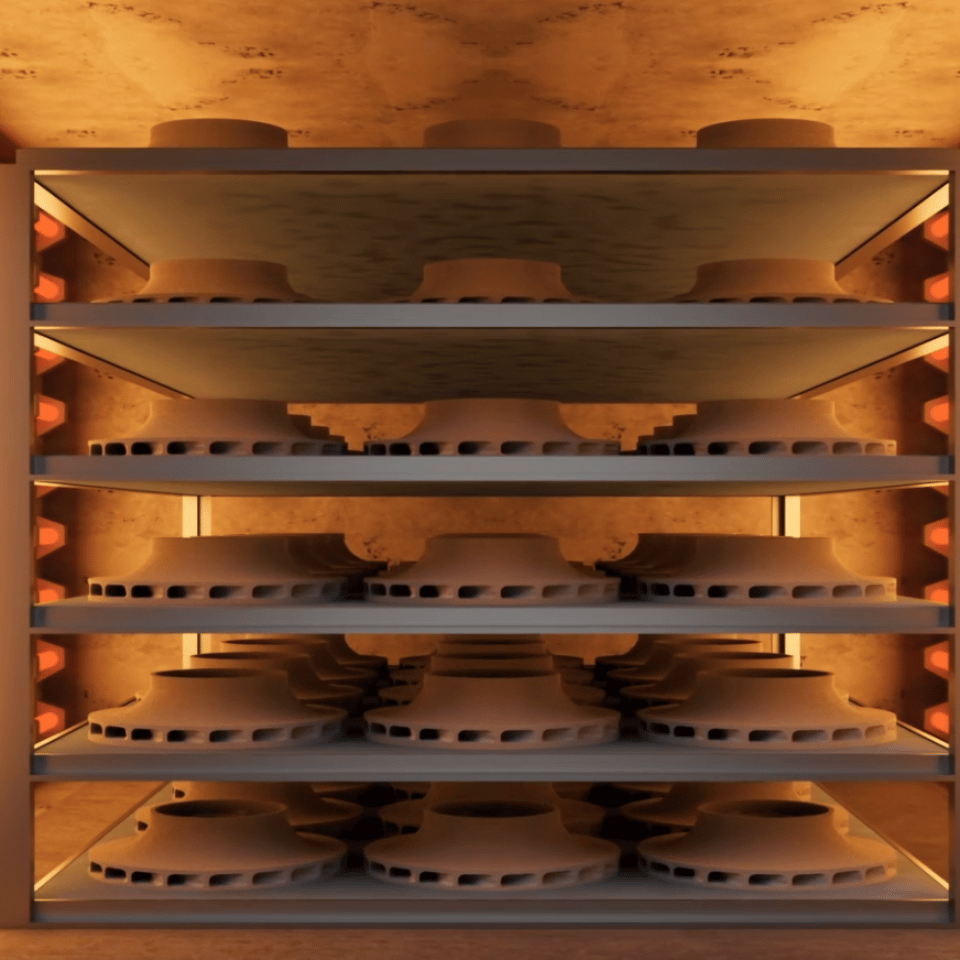
Green parts being being sintered inside a furnace

Sinter

Brown parts are loaded into a vacuum furnace, where the remaining stage 2 binder is removed before the metal feedstock is sintered into its final form.

Materials Built for Production.

A growing portfolio of production-grade metal alloys.

Titanium Alloys - Ti-6AI-4V (Grade 5)

High strength-to-weight ratio and corrosion resistance for defense, aerospace and medical applications.

Nickel-Based Superalloys - Inconel 625, Haynes 282, MAR-M247

High-temperature alloys designed for demanding environments in energy, aerospace, and propulsion applications

Tool Steels - M2

High wear resistance and edge retention for tooling, fixtures, and high stress production components

Stainless Steels - 316L, 17-4PH

Corrosion-resistant steels suitable for industrial hardware, tooling, and structural components.
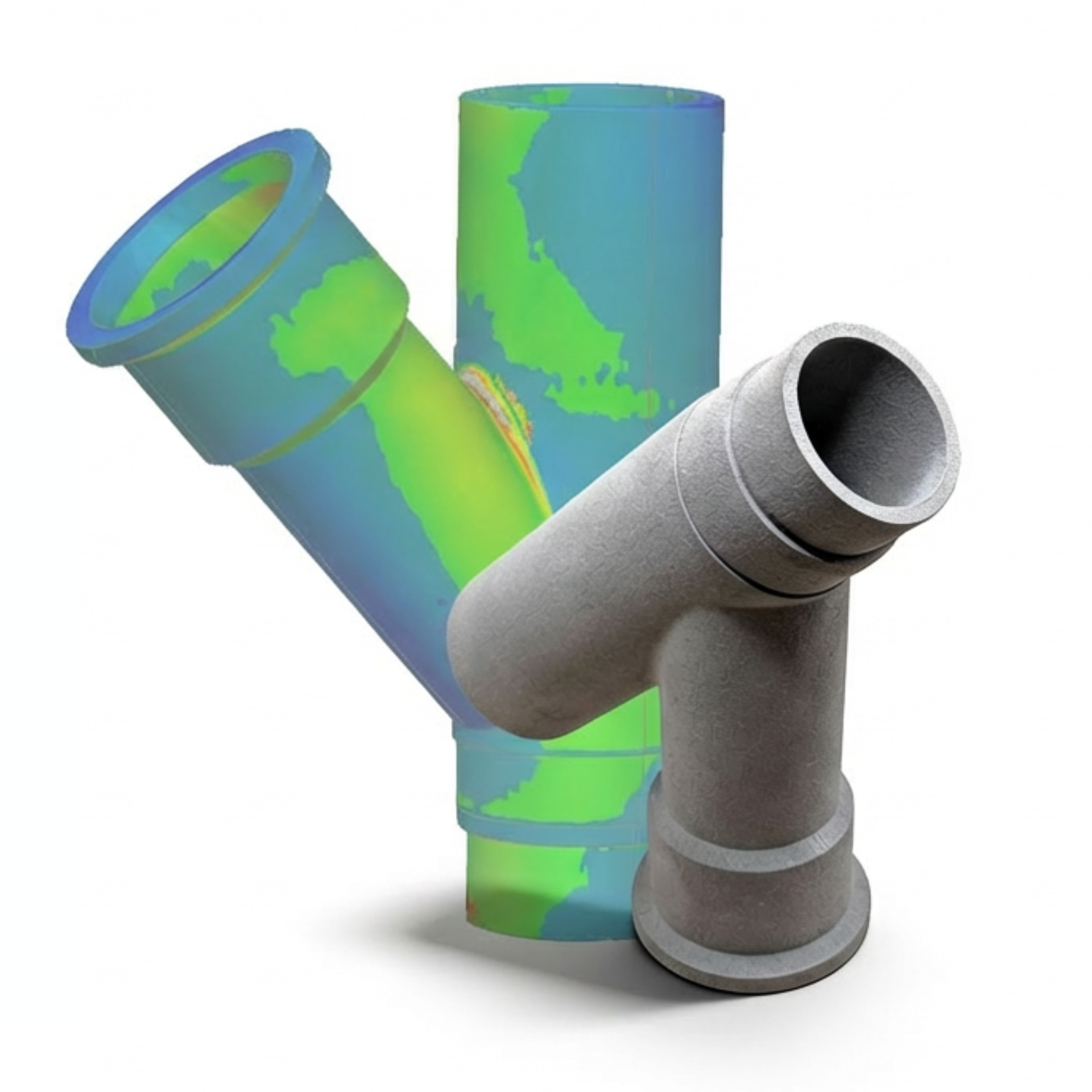
Scan of a part shown beside the printed part

Predictable Dimensional Accuracy

Uniform, Isotropic Shrink - By Design

Dimensional accuracy is not a "nice to have" in metal additive. For most OEMs, it's the gating factor between prototyping and real production. This is where Cold Metal Fusion (CMF) is fundamentally different.

CMF parts shrink isotropically during de-binding and sintering. That means the geometry scales down evenly in all directions, rather than warping, drifting, or distorting unpredictably.

The result is parts that come out of the furnace where you expect them to be - without guesswork, excessive offsets, or iterative tuning.

Applications Built for Production

Cold Metal Fusion enables cost-effective metal parts across demanding industrial applications.

Aerospace & Defense

Production-ready titanium and superalloy components for lightweight structures, thermal environments, and mission-critical hardware.

Energy & Turbomachinery

High-temperature, corrosion-resistant metal components for pumps, turbines, and flow-critical energy systems.

Industrial Equipment

Durable production-grade metal components for machinery, automation, and industrial tooling at scale.

Tooling & Fixtures

Wear-resistant steel components for jigs, fixtures, and manufacturing aids with fast iteration cycles.

Pumps, Valves & Flow Hardware

Dense metal components with complex internal geometries for fluid handling and pressure systems.

Robotics & Automation Systems

Structural and functional metal components supporting next-generation manufacturing and automation systems.

Cold Metal Fusion Runs On All Open SLS Platforms

A growing portfolio of production-grade metal alloys.

CMF extends standard SLS printers beyond polymers, enabling metal part production on open, non-proprietary platforms—without buying a new machine or locking into a single vendor ecosystem.

From compact SLS systems to industrial scale systems ––

Cold Metal Fusion gives teams flexibility across brands, budgets and production scales.