
Cold Metal Fusion prints a green part on a low-cost plastic SLS machine by lightly fusing a metal-powder and polymer-binder mix. The loose powder is removed and reused, and the green part is already stiff enough to mill or drill before it ever hardens. The part then sits in a solvent bath that dissolves most of the binder, after which a furnace slowly ramps to the alloy's sintering temperature. The last 1-3% binder burns off, metal particles fuse, and the part shrinks uniformly to about 97-99% density. Optional finishing steps such as blasting, polishing, heat treatment, or hot isostatic pressing bring the part to final surface and mechanical specifications.
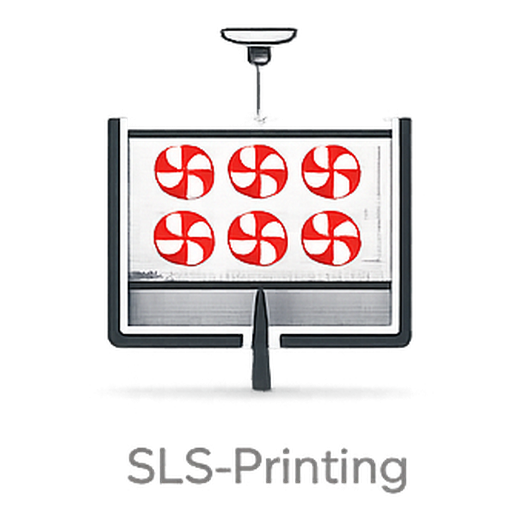
Uses inexpensive, widely available plastic SLS hardware. Full build volume can be packed tightly with no support structures required.
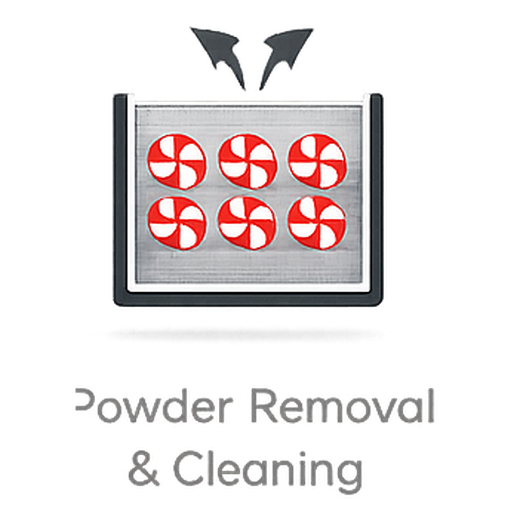
Fast, automated depowdering keeps material costs low and waste near zero. Unsintered powder is collected and fully reused.
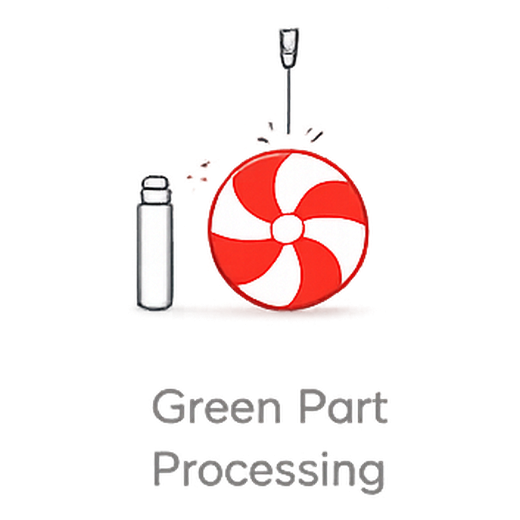
Add features, improve tolerances, or remove excess stock while the material is still soft and tool-friendly.
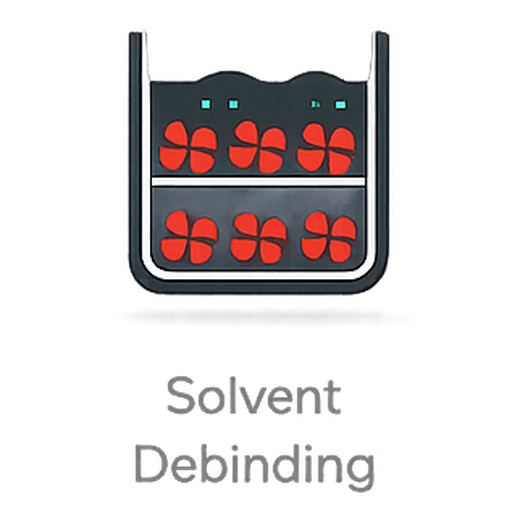
Cheap, scalable, and environmentally friendlier than thermal debinding alone. Parts soak in temperature-controlled solvent that dissolves a portion of the binder.
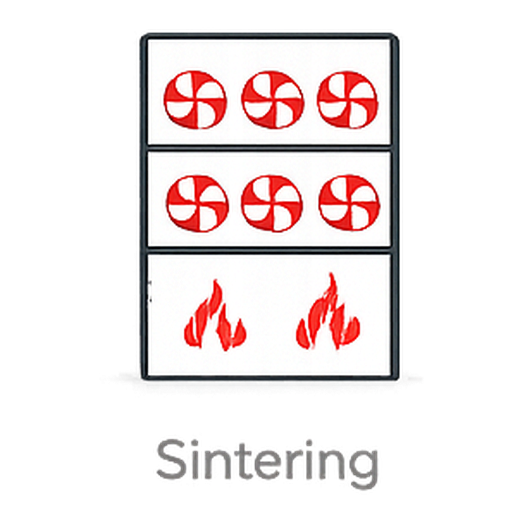
Produces a fully metallic, near-wrought part with consistent shrink and excellent mechanical properties. Final density: 97-99%.
Tailors surface roughness, microstructure, and density to the application. Surface treatments include grinding, polishing, blasting, anodizing, heat treatment, or HIP.
A standard polymer-laser-sintering (SLS) machine spreads a metal-powder plus plastic-binder mix and lightly melts the binder (<80°C). Layers build up with no support structures.
The cooled 'cake' is blown out or water-jetted. Unsintered powder is collected and reused.
The printed-green parts are strong enough for turning, milling, drilling, or grinding before they ever see a furnace.
Parts soak in a temperature-controlled solvent that dissolves a portion of the binder; the solvent is distilled and reused.
Furnace ramps to metal-specific temperature; remaining 1-3% binder burns off, metal particles fuse, and the part shrinks uniformly (≈13% for 316L). Final density: 97-99%.
Surface treatments: grinding, polishing, blasting, anodizing, heat treatment, or HIP to reach final spec.
